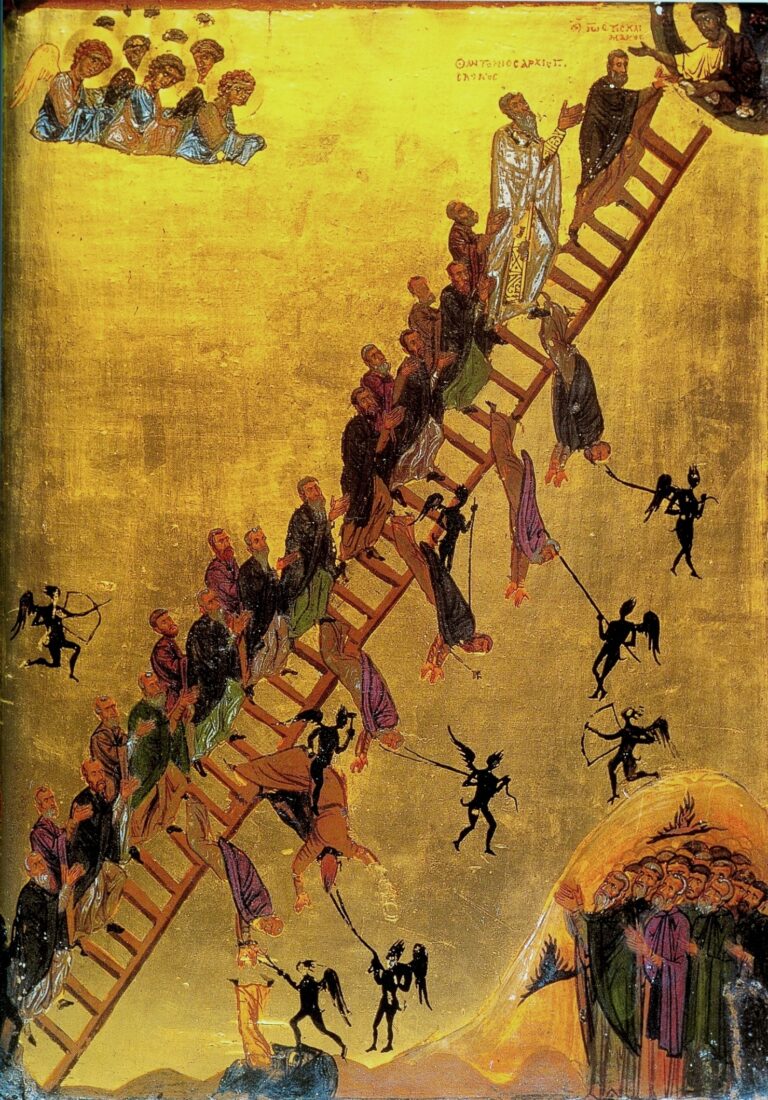
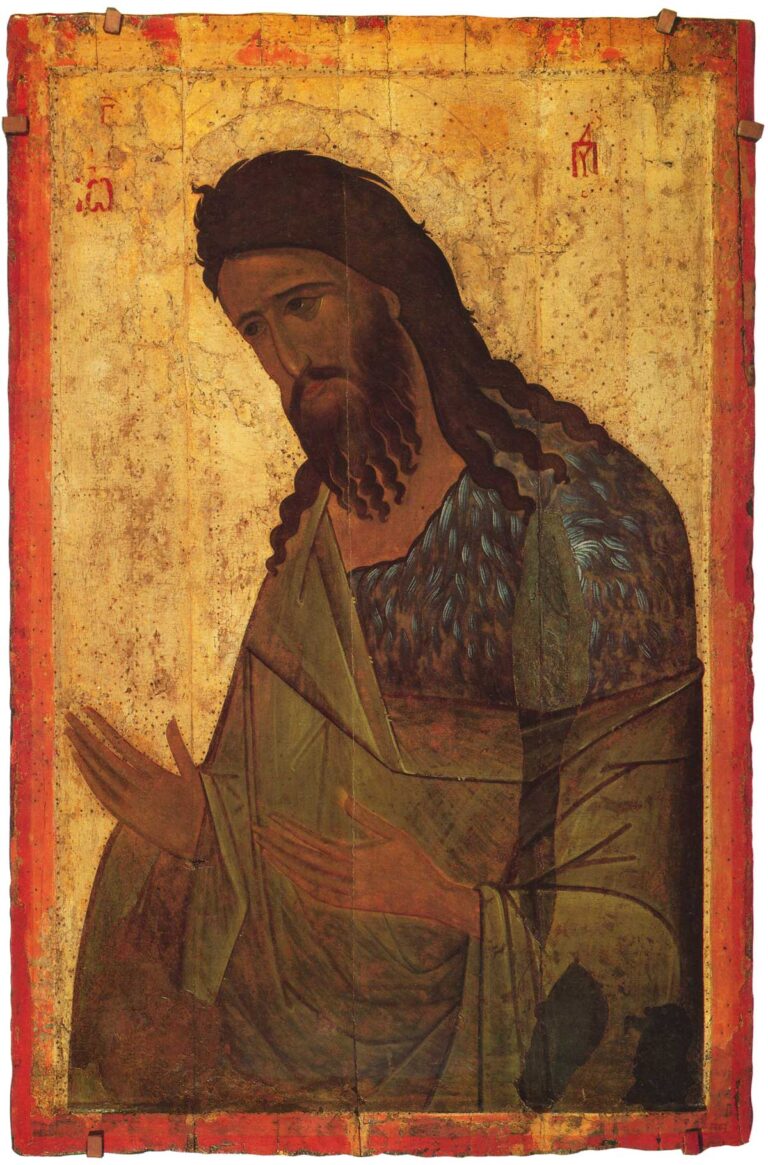
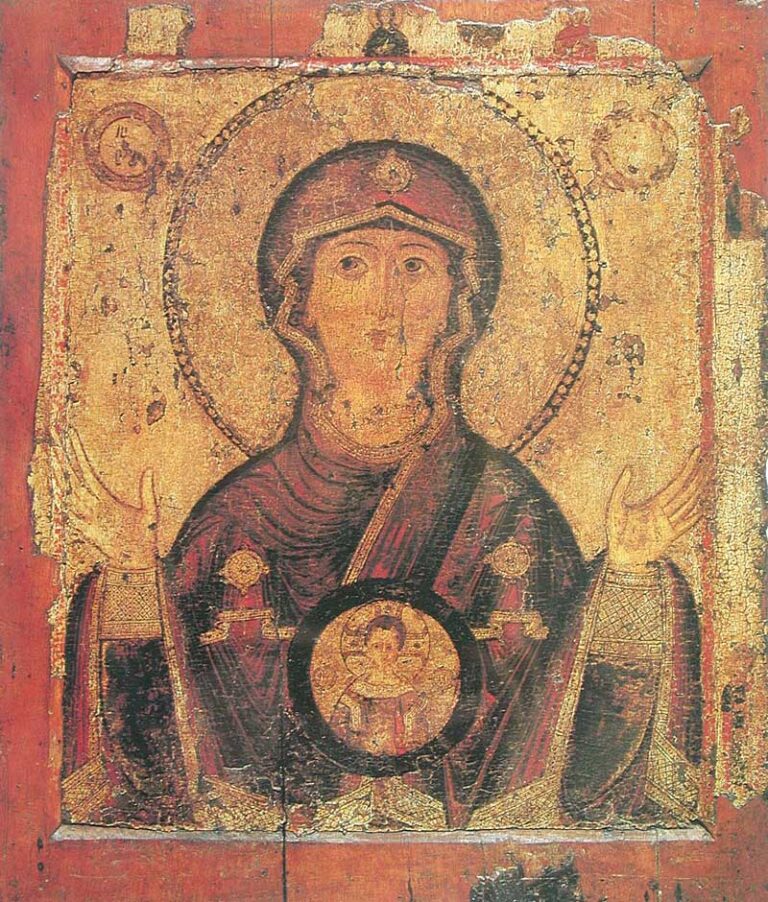
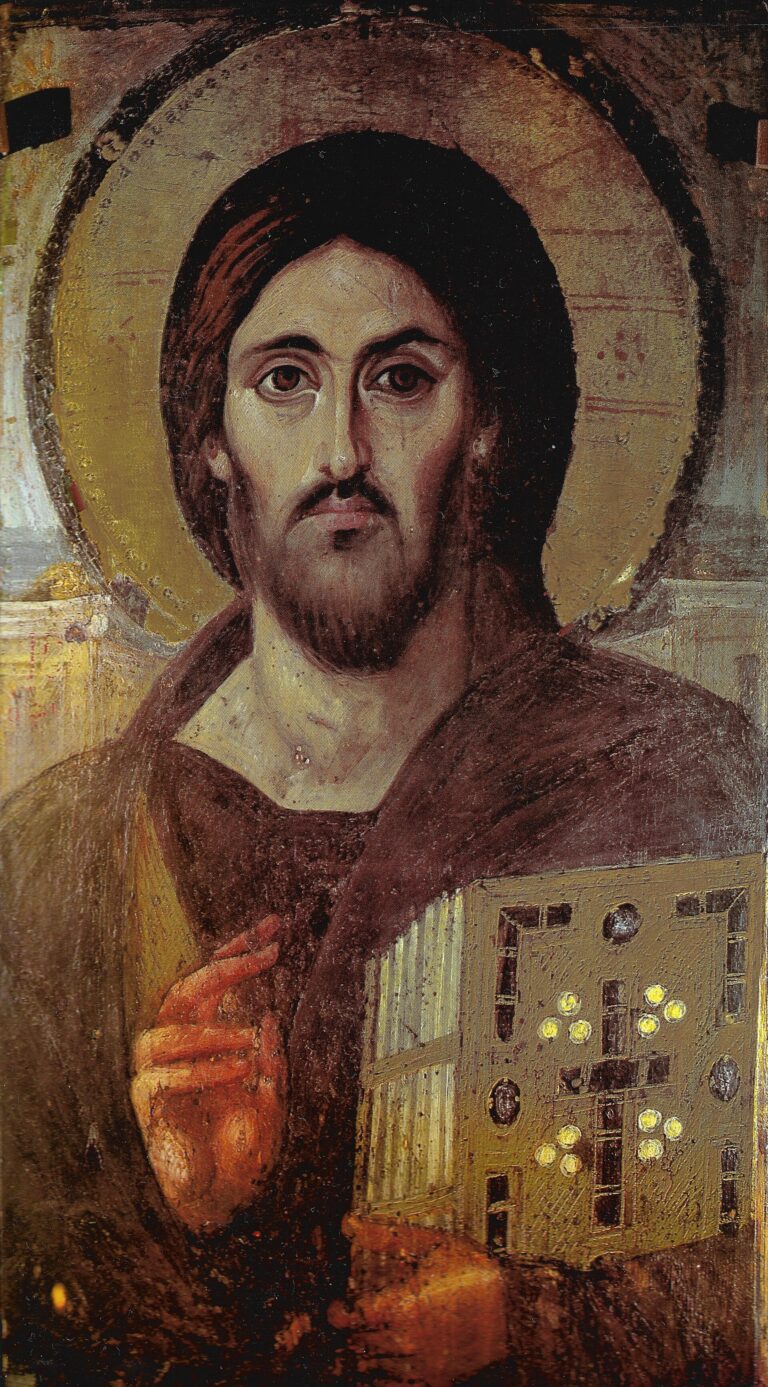
An icon is a holy image of Christ, of the Theotokos, of the angels and the saints, or of an event of sacred history, painted according to the tradition of the Churches and set apart for prayer. For the Orthodox, the icon is neither decoration nor illustration. It is a confession of faith in the Incarnation, a window through which we look toward the Kingdom of God, and a place of meeting where we greet those whom it represents.
In the Old Testament, God forbade Israel to make an image of him, since the people had seen no form on the day he spoke to them at Horeb (Deut 4:15). The same Law, however, commanded images for the tabernacle: two golden cherubim over the mercy seat, and cherubim woven into its curtains (Exod 25:18-22; 26:1). The prohibition guarded against idols, that is, against the worship of creatures in place of the Creator, and against any claim to portray the divine nature itself. The Wisdom of Solomon, for its part, already calls divine Wisdom “an image of his goodness” (Wis 7:26).
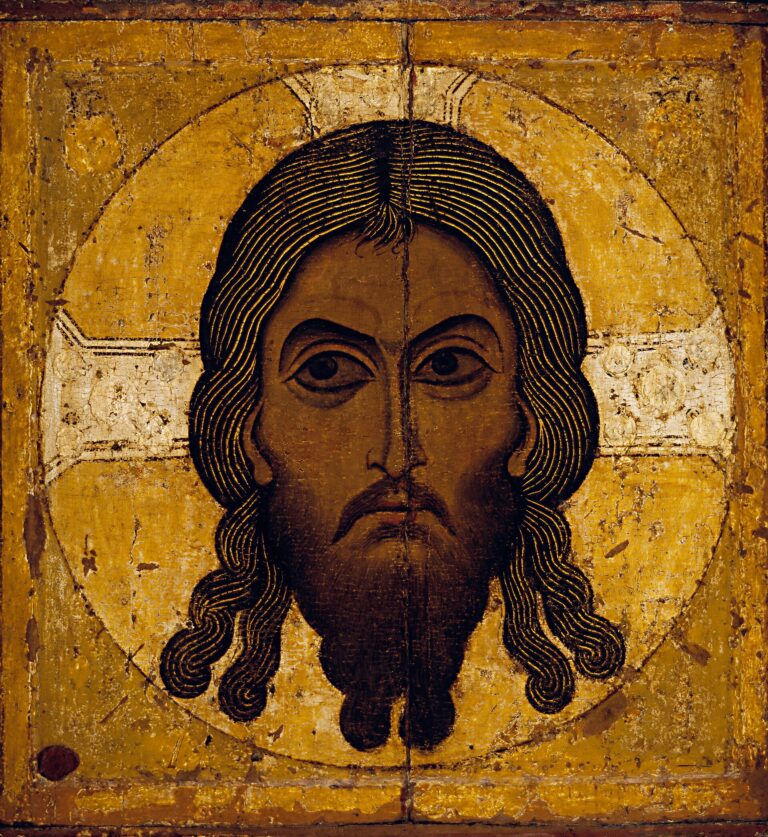
With the Incarnation, everything changed. The eternal Son, “the image of the invisible God” (Col 1:15), became man, and the apostles could testify to what they had heard, seen with their eyes and touched with their hands (1 John 1:1). Saint John of Damascus draws the conclusion: when the One who has no body and no form becomes visible in the flesh, we may depict what has been seen.1 In this light, to reject the icon of Christ is finally to question the reality of his humanity, since a man who cannot be portrayed is no true man.
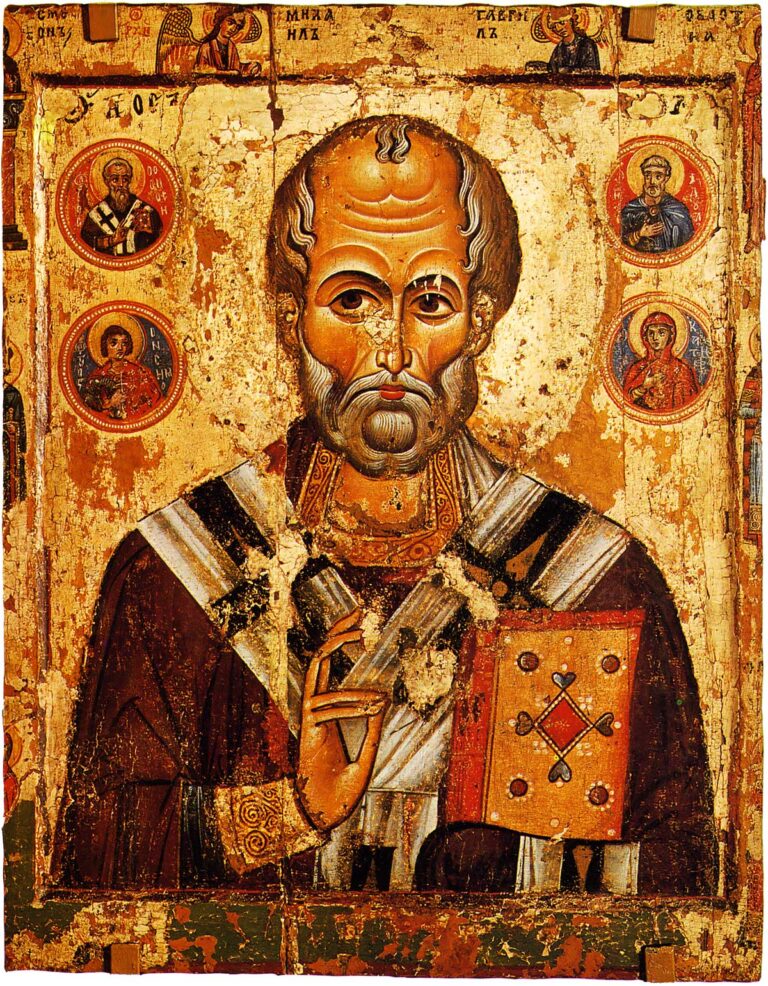
In 787, the Seventh Ecumenical Council, gathered at Nicaea, defined that holy images of Christ, of the Theotokos, of the angels and of all the saints may be set up in churches, on sacred vessels and vestments, in homes and along the roads, and may be honored with a kiss, with incense and with lamps. The Council carefully distinguished this honorable veneration (in Greek, proskynesis) from the true worship (latreia) that belongs to God alone.2 Its reasoning followed Saint Basil the Great, who had written that the honor paid to the image passes to its prototype.3 When we kiss an icon of Saint Nicholas, we greet Saint Nicholas himself; when we bow before the icon of Christ, we worship Christ, not wood and paint.
The definition of 787 answered a long crisis. Around 726 to 730, Emperor Leo III began to act against the veneration of images, and in 754 a council convened by his son Constantine V at Hieria condemned icons altogether. Monks, bishops and laypeople who resisted were exiled, imprisoned or put to death. The Council of Nicaea restored the icons, yet a second wave of iconoclasm followed in 815 under Leo V. Saint Theodore the Studite then gave the classic answer to the iconoclasts: an icon does not depict the divine nature, which cannot be portrayed, but the person of the incarnate Word, who is seen in his humanity.4
In March 843, under Empress Theodora and Patriarch Methodius, the veneration of icons was finally restored. The Churches still celebrate this victory every year on the first Sunday of Great Lent, the Sunday of Orthodoxy, when the faithful carry icons in procession and the Synodikon of Orthodoxy proclaims the faith of the councils.5
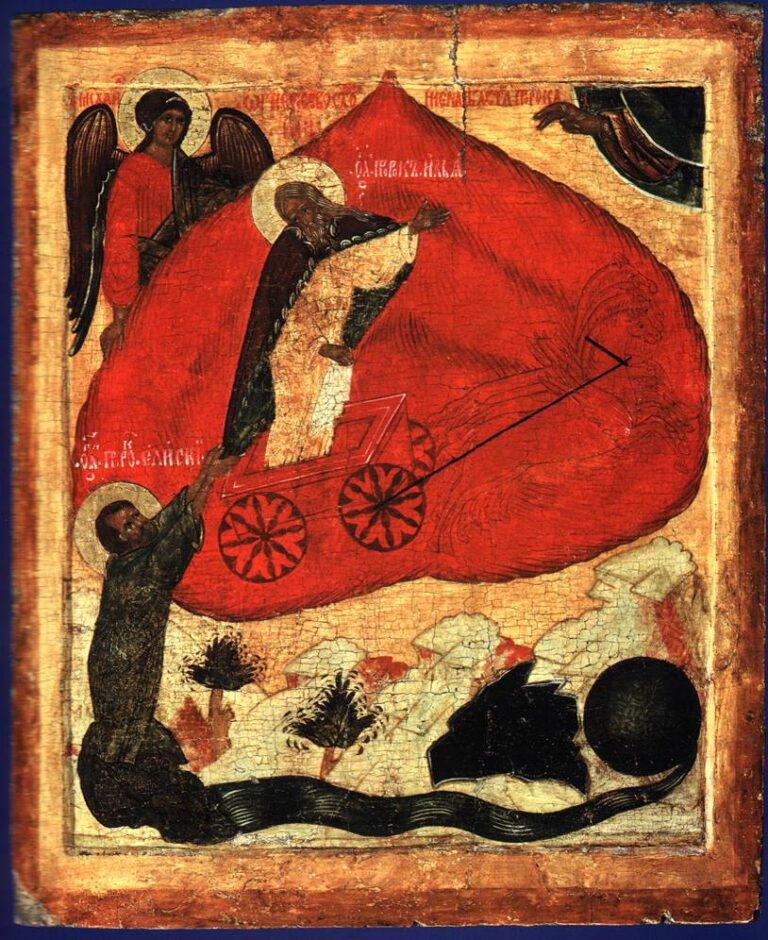
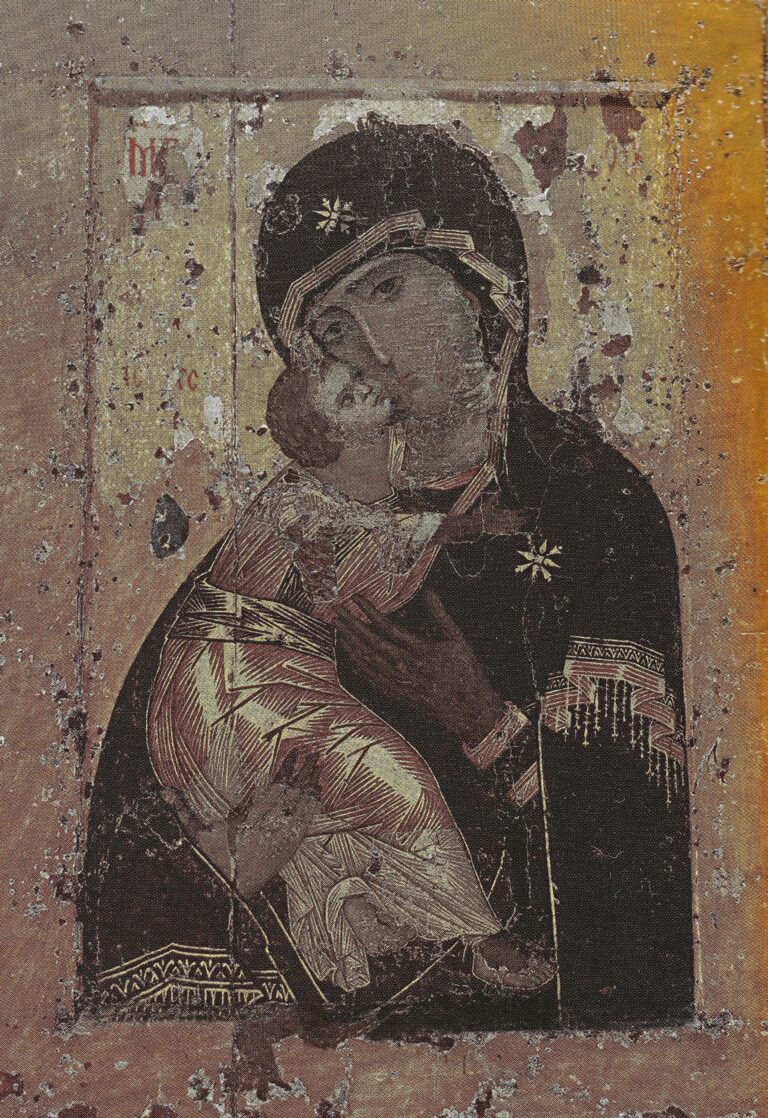
An icon is not a photograph of the past. Its purpose is to show the world transfigured by grace, and for this, the tradition developed its own visual language. The gold background speaks of the uncreated light of God. Light does not fall on the figures from an outside source, and they cast no shadows, since the light is within them. Perspective is often reversed, so that lines open toward the one who prays rather than vanishing into the distance. Faces are calm, eyes are large and attentive, and the senses appear purified rather than agitated. Buildings, mountains and trees are simplified and placed at the service of the event.6
Every icon also bears an inscription naming the person or the feast. The name, together with faithfulness to the received likeness, is what makes an image an icon of this particular saint. For this reason, iconographers work from prototypes handed down from generation to generation, and the freedom of the artist serves the memory of the Churches rather than personal invention.
The earliest surviving icons, such as those of the sixth century preserved at Saint Catherine’s Monastery on Mount Sinai, were painted in encaustic, with pigments mixed in hot wax. The classic technique that followed is egg tempera on wood. A panel is covered with linen and with many thin layers of gesso, a mixture of chalk and animal glue, then polished. The drawing is transferred, the background and haloes are gilded, and the colors, ground from minerals and earths and bound with egg yolk, are built up from dark to light, so that the figure seems to emerge from darkness into light. The work ends with the inscription and a protective coat of oil varnish, and the icon is then blessed for use in prayer.7 Many iconographers prepare for their work, and accompany it, with prayer and fasting.
In an Orthodox church, the icons surround the faithful as the great cloud of witnesses (Heb 12:1). The icon screen, or iconostasis, developed from the low barrier of the early Byzantine sanctuary into the tall screen familiar in Russian churches from the fifteenth century. Christ is always to the right of the Royal Doors and the Theotokos to the left, with Saint John the Forerunner, the patron of the church and the archangels nearby; above them may stand the rows of the feasts, of the Deesis, of the prophets and of the patriarchs. On the stand in the middle of the nave, the icon of the saint or feast of the day receives the veneration of all who enter.
In Orthodox homes, an icon corner, usually on an eastern wall, gathers the family for prayer, with a lamp kept burning before the images. Some icons have become famous for the healings and graces granted through them, and they are carried in procession or visited by pilgrims. In every case, the honor goes to the One whose holiness shines in the saints, and the icon invites us to become ourselves what we contemplate, living images of God.
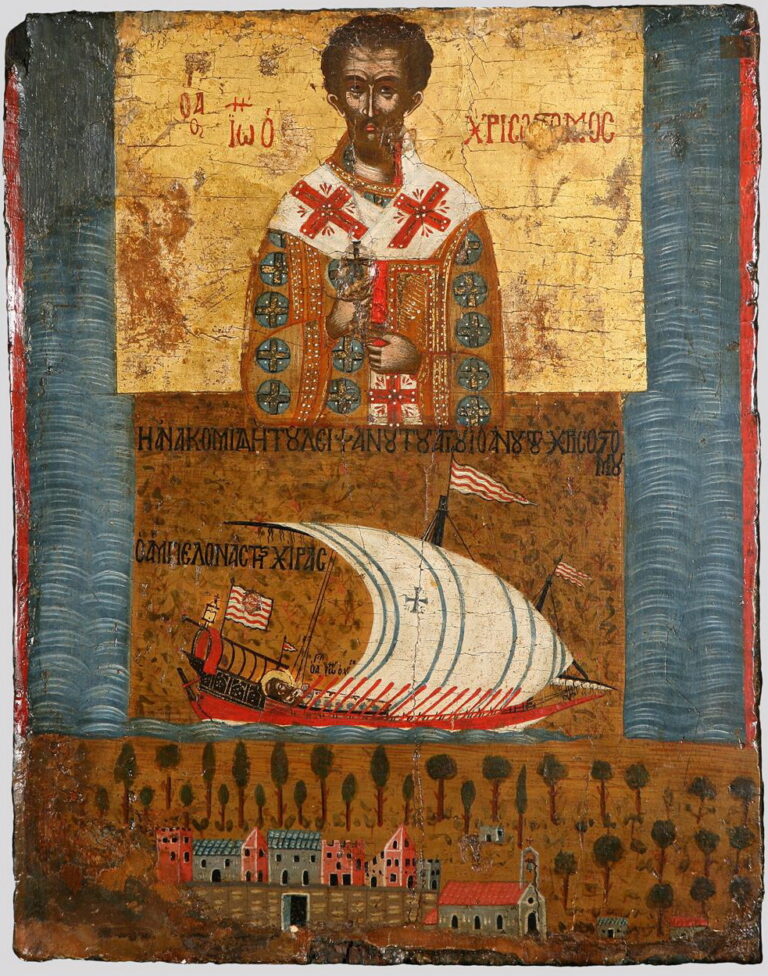
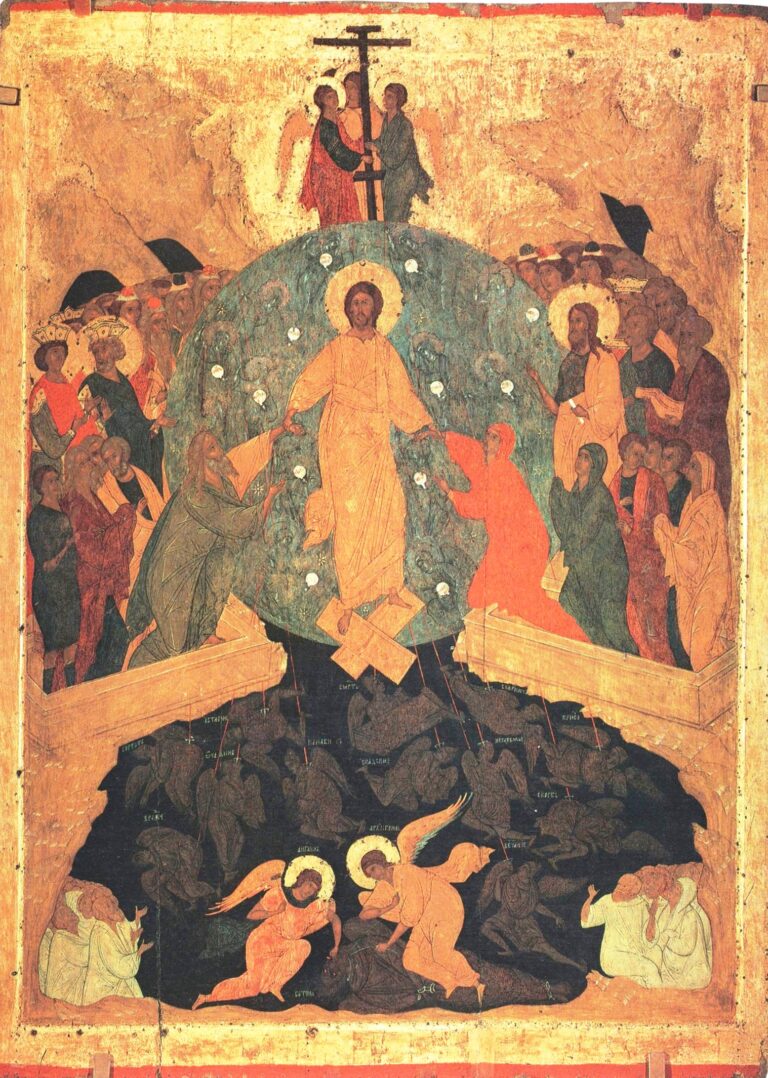
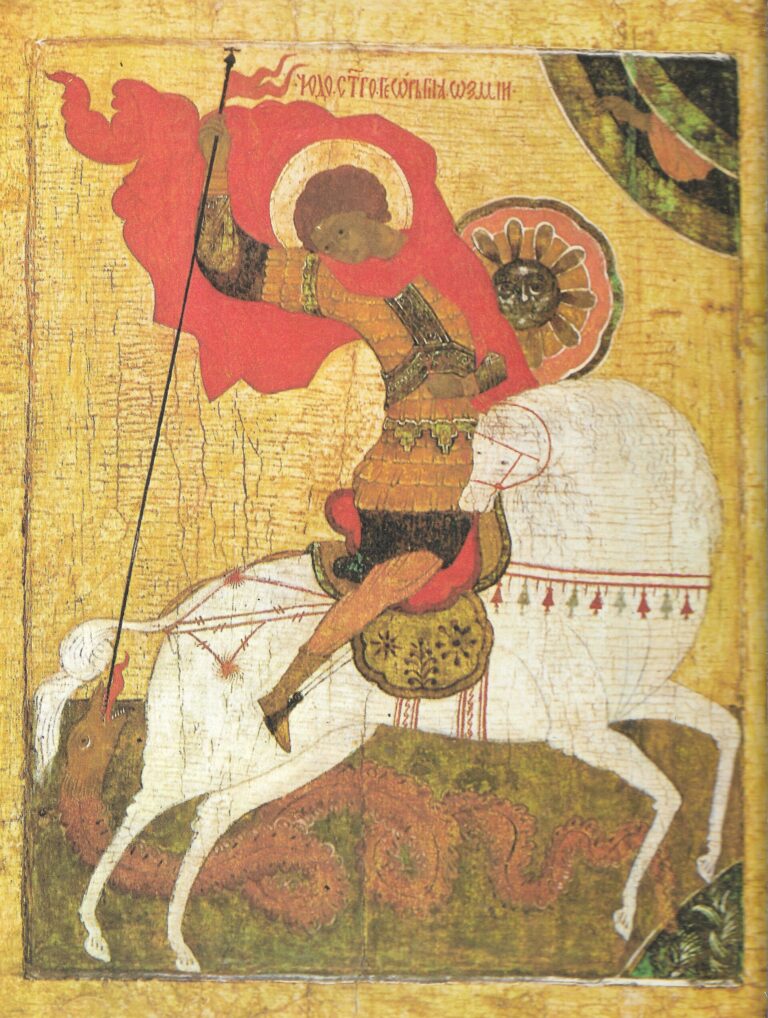
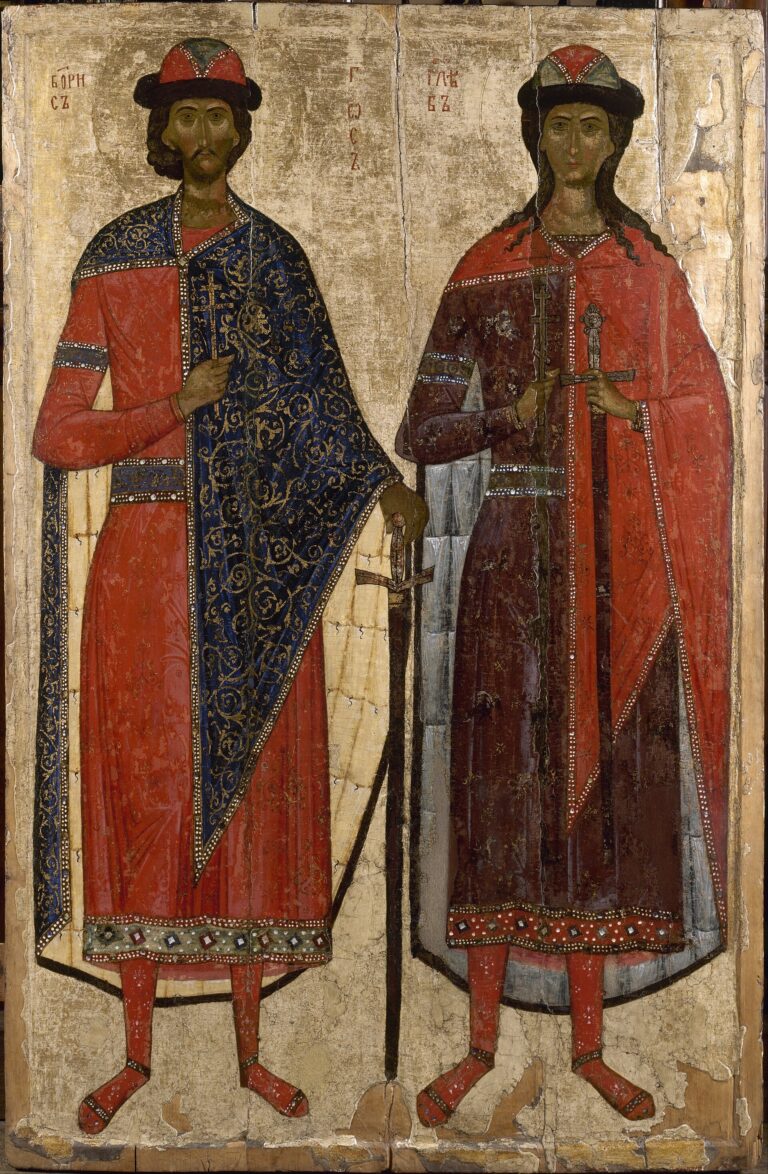
The icons shown below are historic works, from the early icons of Sinai and the mosaics of Constantinople to the masters of Novgorod and Moscow. All are in the public domain and come from Wikimedia Commons, with their credits. Each opens to its own page with its date, origin and present location, and a new selection appears at each visit.